
Listen on Apple PodcastsListen on SpotifyListen on YouTubeListen on Amazon MusicListen on Podcast AddictBecome a Patron!

The US invasion of Grenada in 1983, codenamed Operation Urgent Fury, remains a pivotal event in both Caribbean and Cold War history. As the world became increasingly polarised during the Cold War, Grenada found itself at the centre of geopolitical tensions, culminating in a military intervention that would have lasting implications.
Before the invasion, Grenada had experienced a tumultuous political landscape. Prime Minister Sir Eric Gairy’s rule became synonymous with corruption, intimidation, and the use of private militias. It was overthrown by the Marxist New Jewel Movement, led by Maurice Bishop, which marked a significant shift in the island’s governance. The new regime, which aligned itself with Cuba and the socialist bloc, promised social reforms but also imposed authoritarian measures.

By 1983, internal strife within the People’s Revolutionary Government led to Bishop’s execution and the rise of a military council that declared a shoot-to-kill curfew. The Reagan administration, fearing the spread of communism in the Caribbean and the safety of American citizens, particularly medical students at St. George’s University, initiated military action.
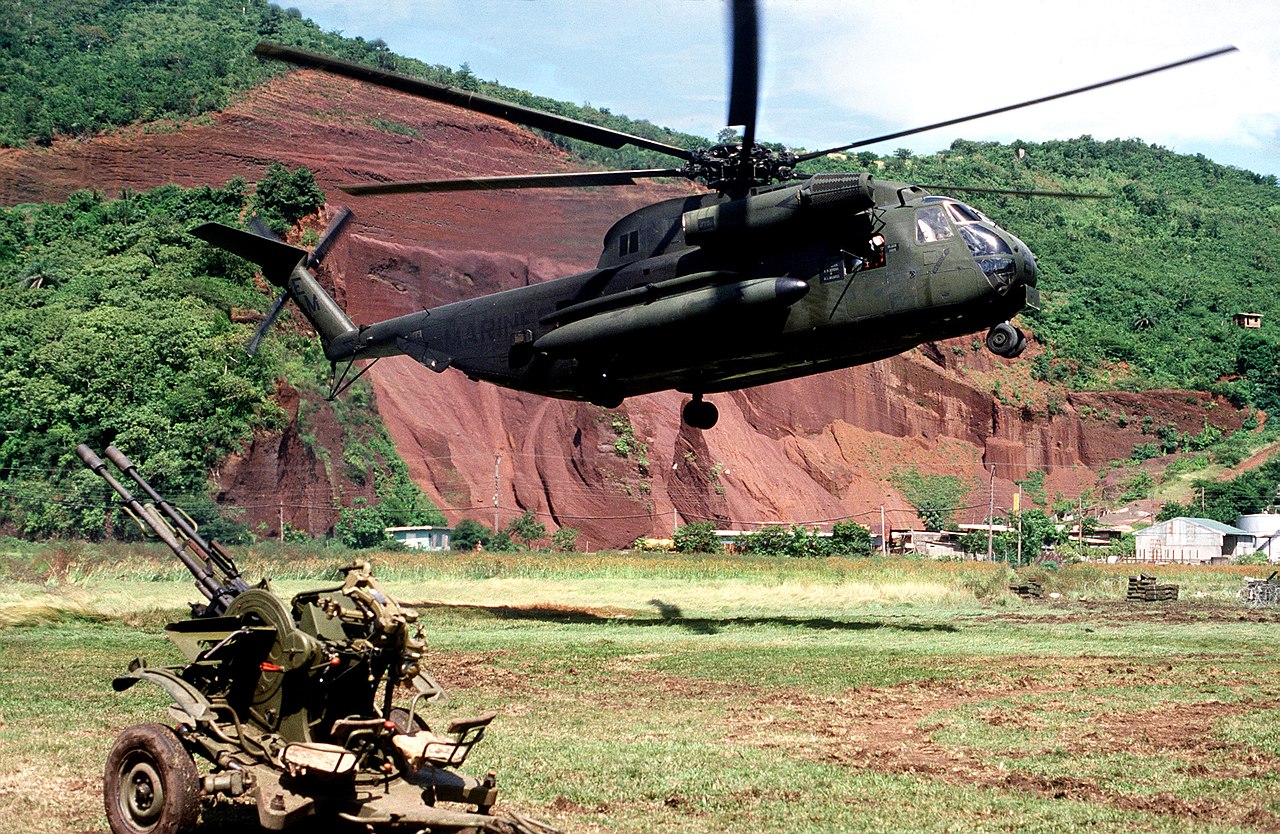
On October 25, 1983, US forces launched a swift invasion, aiming to seize control of the island and restore order. However, the operation was fraught with challenges. Intelligence failures, miscommunication, and the chaotic nature of the military operation raised questions about the effectiveness of US planning and coordination. As the invasion unfolded, American troops faced determined resistance from Grenadian forces, supported by Cuban personnel. The initial objectives were achieved, but not without significant casualties and confusion. The operation’s aftermath revealed deep flaws in the US military’s joint command structure and intelligence capabilities, prompting a reassessment of military operations in the years that followed. Internationally, the invasion was met with condemnation.
The United Nations General Assembly passed a resolution denouncing the intervention as a violation of international law. Critics argued that the US had blurred the lines between humanitarian intervention and regime change, setting a dangerous precedent for future military actions.
In the weeks and months following the invasion, Grenada began to stabilise. An interim government was established, and elections were held, marking a return to parliamentary rule. However, the legacy of the invasion remained complex. While for some Grenadians, it represented liberation from an oppressive regime, for others, it symbolised the disruption of their sovereignty and the trauma of foreign intervention.
The lessons learned from Grenada would resonate within the US military, leading to reforms in command structures and intelligence operations. As history often shows, the smallest conflicts can have the most profound impacts, shaping policies and perceptions for decades to come.
The story of Grenada is not just about a military operation; it is a reminder of the intricate interplay between local politics and global power dynamics.
Related episodes
1983 – the year the Cold War almost turned hot

The fight to preserve Cold War history continues and via a simple monthly donation, you will give me the ammunition to continue to preserve Cold War history. You’ll become part of our community, get ad-free episodes, and get a sought-after CWC coaster as a thank you and you’ll bask in the warm glow of knowing you are helping to preserve Cold War history.
Just go to https://coldwarconversations.com/donate/
If a monthly contribution is not your cup of tea, We also welcome one-off donations via the same link.
Find the ideal gift for the Cold War enthusiast in your life! Just go to https://coldwarconversations.com/store/
CONTINUE THE COLD WAR CONVERSATION
-
-
-
- Follow us on BlueSky https://bsky.app/profile/coldwarpod.bsky.social
- Follow us on Threads https://www.threads.net/@coldwarconversations
- Follow us on Twitter https://twitter.com/ColdWarPod
- Facebook https://www.facebook.com/groups/coldwarpod/
- Instagram https://www.instagram.com/coldwarconversations/
- Youtube https://youtube.com/@ColdWarConversations
-
-
Grenada, Operation Urgent Fury, US Invasion, Cold War, Political History, Military Strategy, Maurice Bishop, Caribbean Politics, International Relations, Regime Change, American Military Intervention, Grenadian History, Cuban Influence, Eastern Caribbean, Military Operations, Intelligence Failures, Humanitarian Intervention, Political Reconstruction, US Foreign Policy, Historical Analysis, US military, US interventions,